|
||||||||
|
||||||||
| AHYMSIN newsletter, issue - FEBRUARY 2011 | ||||||||
|
||||||||
A Sufi - Yogi DialogNew Delhi, February 7th, 2011by Swami Chetan Bharati
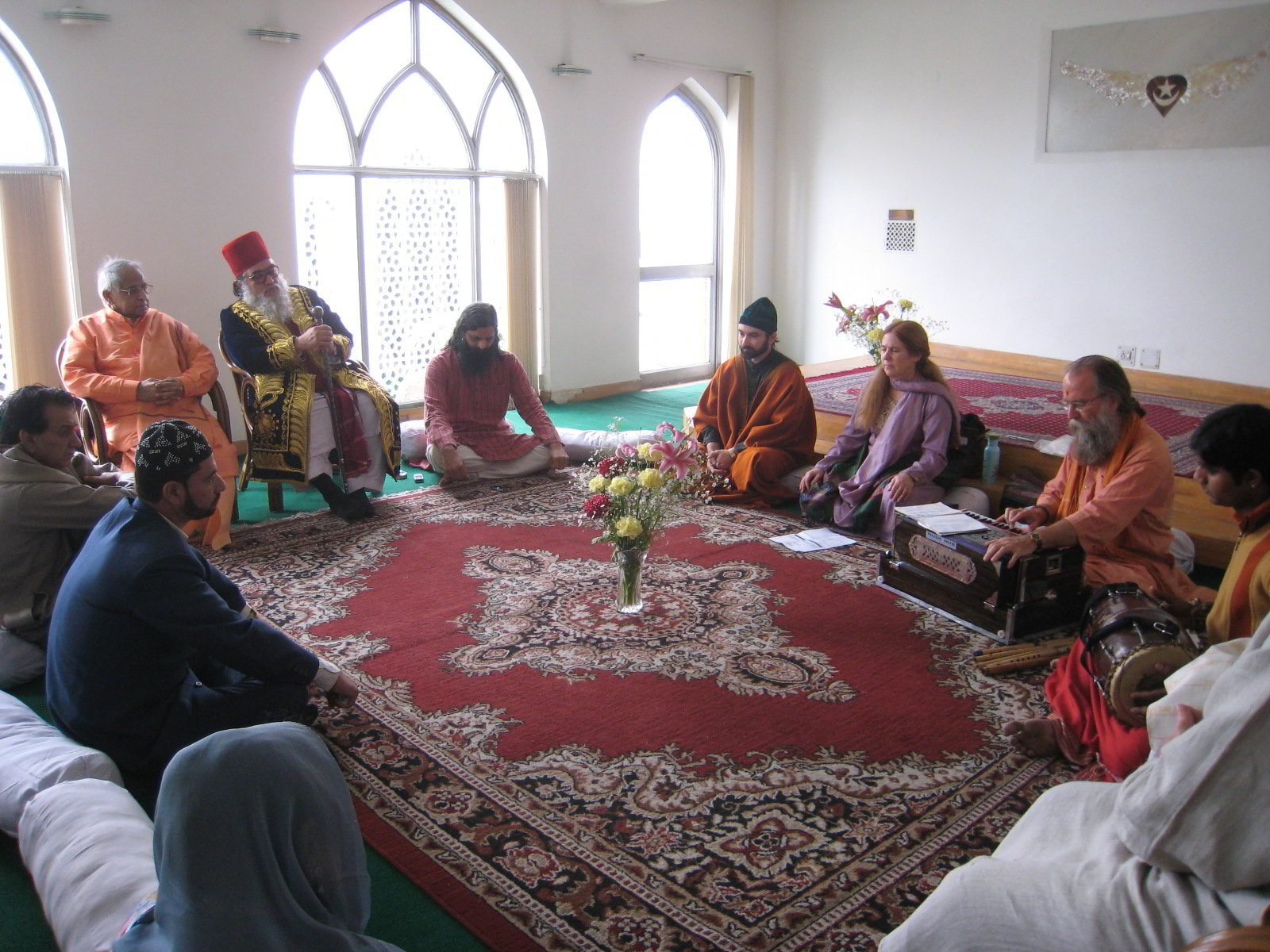
A Sufi-Yogi Dialogue about The Nature of Oneness was held at the Dargah of Hazrat Inayat Khan at New Delhi, India on February 7th, 2011; organized by Dena Merriam of the Global Peace Initiative of Women. This was the fourth in a series of dialogues between practitioners of meditation in the Sufi and Yogic traditions on the nature of Divine Reality, the path of awakening to the relationship of the self with the Divine, and the nature of oneness. The purpose of this fourth dialogue was to explore the deeper understanding of oneness in the Sufi and Yogic traditions in the context of meditation practices.
People were drawn to Swamiji like bees towards flowers. Even as Swamiji approached the dargah to make offerings the muslim-hindu devotees flocked to Swamiji touching his feet and requesting him to place his hands on their heads to receive his blesings.
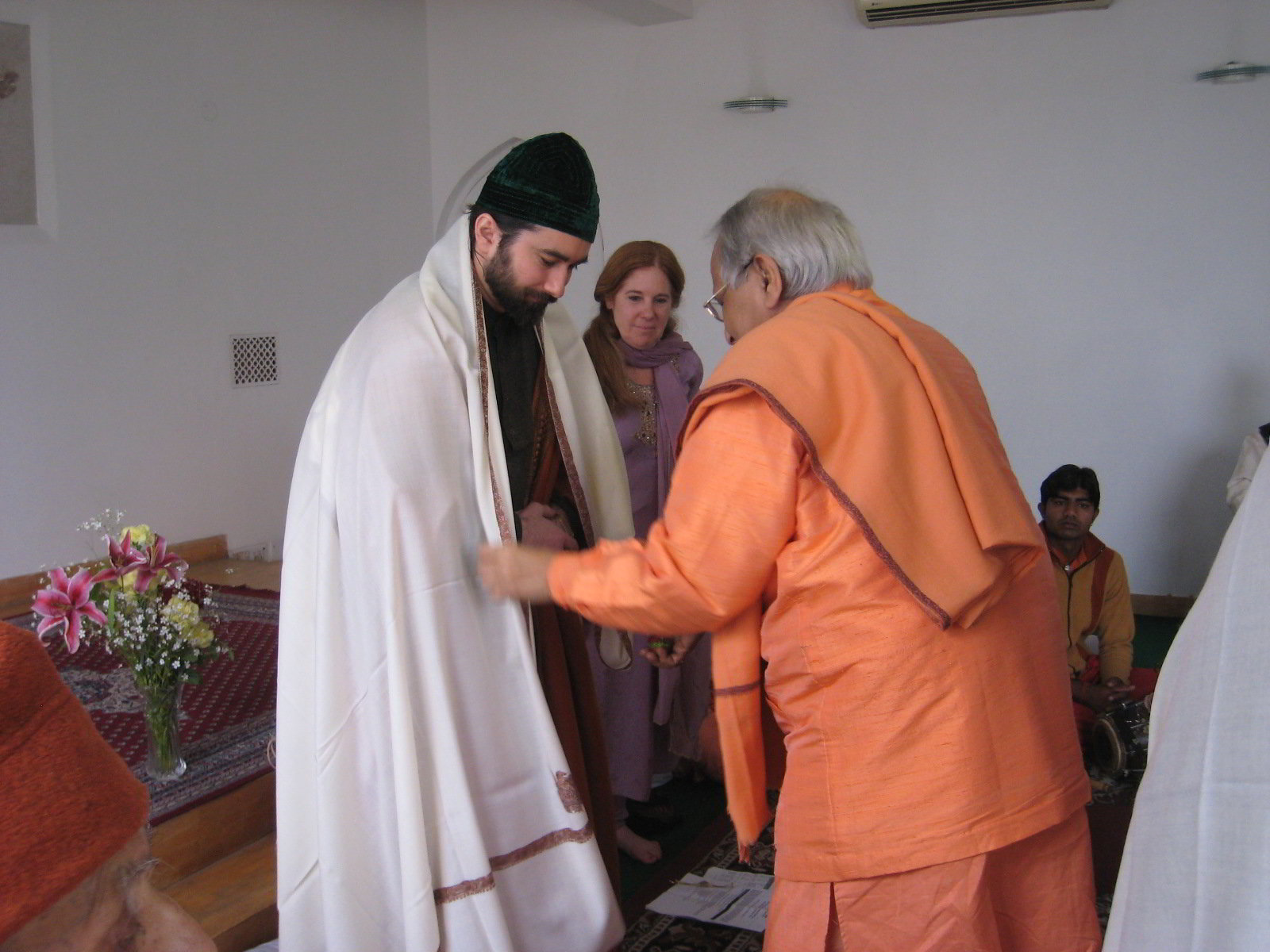
Swami Veda offered chaddar, rose-petals, perfumes, and incense-sticks at the dargah. Swamiji’s act of worship was delightful to watch. He then sat in meditation along with the sufi’s and other participants present in the dargah. The place was vibrant with love energy. After meditating a while, Swamiji proceeded to the hall where the proceedings of the day’s events followed. Among the delegates, was also present Syed Ahmed Shah Chisti Maududi from Herat, Afghanistan, who has great love and admiration for Swami Veda. The re-union of the two sufis, or should one say yogis, was a delight to all eyes, for the love that they shared was evident to all. Swamiji tells us that there are four major Sufi Orers that branch off further into nearly three dozen worldwide. The four major ones are, Chishti, Qadiri, Suhrawardi and Naqshbandi – each with own tariqat (methods) and silsileh (guru-parpampara=lineage). Of these, Chishti is followed by 95% of Sufis of South Asia (India, Pakistan, Bangladesh, Afghanistan) and India is full of the sacred ziyarats (places of pilgrimage) where the Chishti Sufi masters are enshrined. Syed Ahmed Shah is direct descendant of the founder of the Chishti Sufi Order that was established in 930 A.D. in Chisht, near Heart, Afghansitan. Syed Ahmed Shah Chisti presented and re-presented gifts as an offering of love and devotion to Swami Veda and then to Pir Zia Inayat Khan and Dena Merriam. The morning session commenced with invocations to the Divine Beloved through the chanting of Bhajans by Swami Mangalananda and few recitations from the Koran by Waris Miyan. Thereafter Swami Veda took us through a short meditation simultaneously in English, Urdu, and Hindi, connecting the sufi-yogi traditions of meditation though Hosh-dar-Dam (breath-awareness), and a divine name like Allah or, as he said, using ‘a divine name according to your own mazhab (religion) and language’. The whole gathering seemed motionless and still.
This was followed by Syed Ahmed Shah Chisti sharing the aspects of meditation using breath-awareness and sacred word in the sufi tradition. It seemed like a continuity of Swami Veda’s guided meditation with several references to Swamiji’s meditation session. This was followed by two other delegates sharing their thoughts; after which, Pir Zia Inayat Khan expanded on Swami Veda and Syed Ahmed Shah Chisti’s sessions with primary focus on breath-awareness, speaking about the sufi-yogi nexus since the times of the great Yogi Gorakshanath of Nath sampradaya. The informal session was concluded with a summing up by Dena Merriam and a bhajan by Swami Mangalananda. The delegates and participants flocked around Swami Veda seeking his blessings. It seemed that everybody wanted Swamiji’s blessings and a picture taken with him. Pir Zia Inayat Khan expressed pleasant surprise that Swamiji was so familiar with the Sufi tradition and confided with Swamiji about the similarities of the guided session that Swamiji had lead in the gathering earlier, to the very practices he shareD with his group of Sufis. Swamiji and Pir Zia reminisced about the connection that his illustrious father Pir Wilayat Khan had with Swamiji’s Gurudeva Swami Rama of the Himalayas. Dr. Meem Zaffar also sought Swamiji’s blessings guidance. He has translated into his native Kashmiri the Shiva-sutras, along with the commentaries of Kshemaraja and Bhaskara. Syed Aslam Andrabi who takes care of about 600 mosques in Kashmir (and who had also been to the Ashram for the first Yogi-Sufi Dialogue in January 2010) requested to see Swamiji along with Syed Ahmed Shah Chisti and a few other high-profile guests to seek his personal advice and blessings. It was agreed that they would meet Swamiji later the same evening. This was to be followed by lunch, but Swamiji begged off, reluctantly indicating a need to rest his body. As we prepared to leave, the Sheikh from Afghanistan again hugged Swamiji several times, addressing him, ‘My Beloved, My beloved’, and thanking him for his presence while assuring that he would visit Swamiji the same evening. People present rushed to seek Swamiji’s blessings as we approached the car. People were always waiting upon Swamiji to serve him wherever he went. They couldn't help but fall silent and feel the love pouring out of him. Many people and particularly spiritual aspirants are often over-whelmed and speech-less merely by Swamiji’s presence. While several other Sufis were planning to visit Swamiji along with Syed Ahmed Shah, the latter chose to come accompanied only by Dr. Sharif (who is the director of the Ziarat of Sufi Pir Inayat Khan) serving as interpreter. Even though Swamiji’s command of Urdu language is fluent, he found it difficult to understand the Urdu spoken by Syed Ahmed Shah which was heavily accented and mixed with Pashto and Farsi (Persian). Swamiji keeps receiving invitations from Sufis to visit the highest Ziarats like Ajmer Sharif, but Swamiji’s physical condition now prevents accepting these invitations. AN EVENING WITH MY BELOVED…
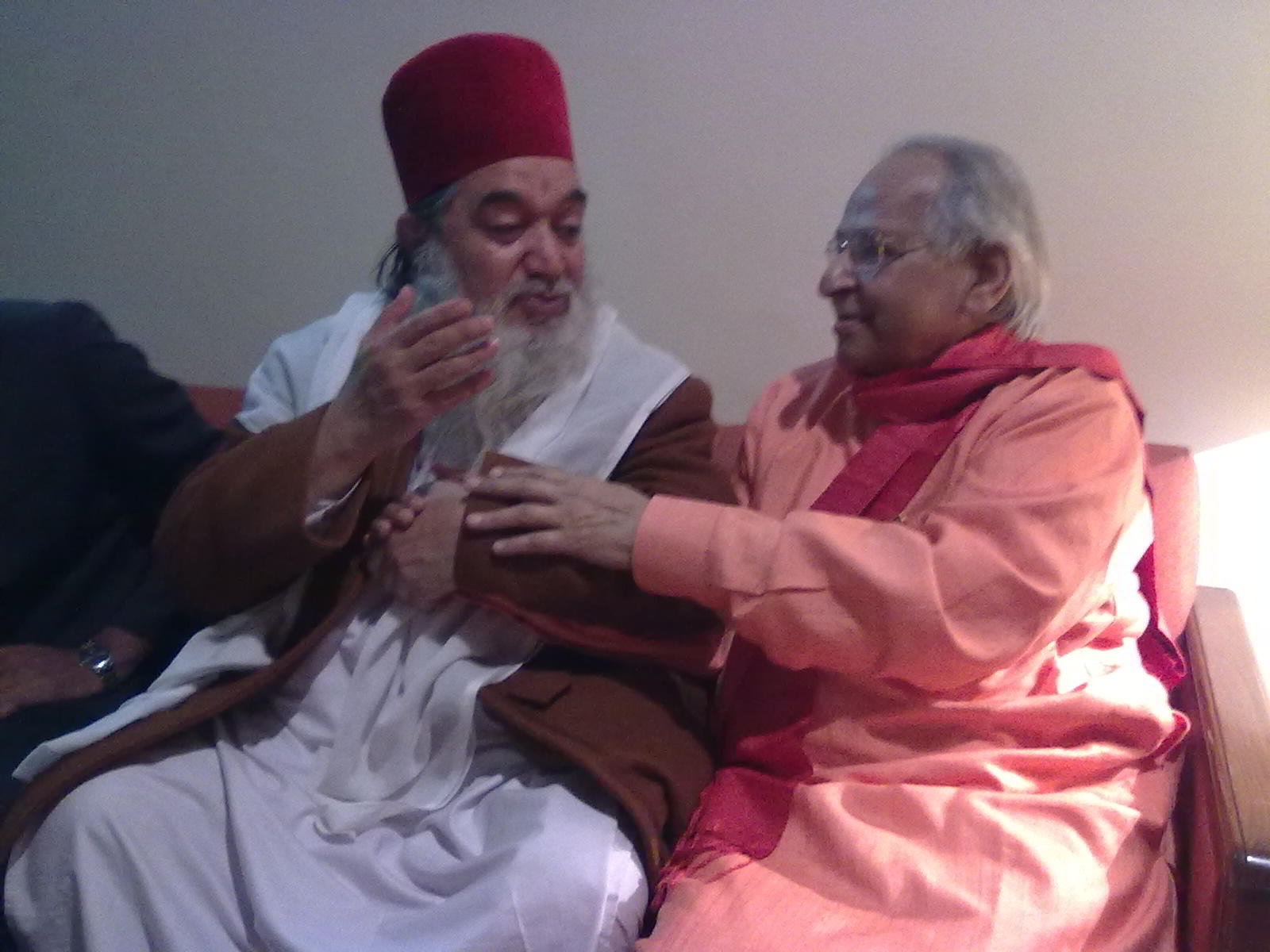
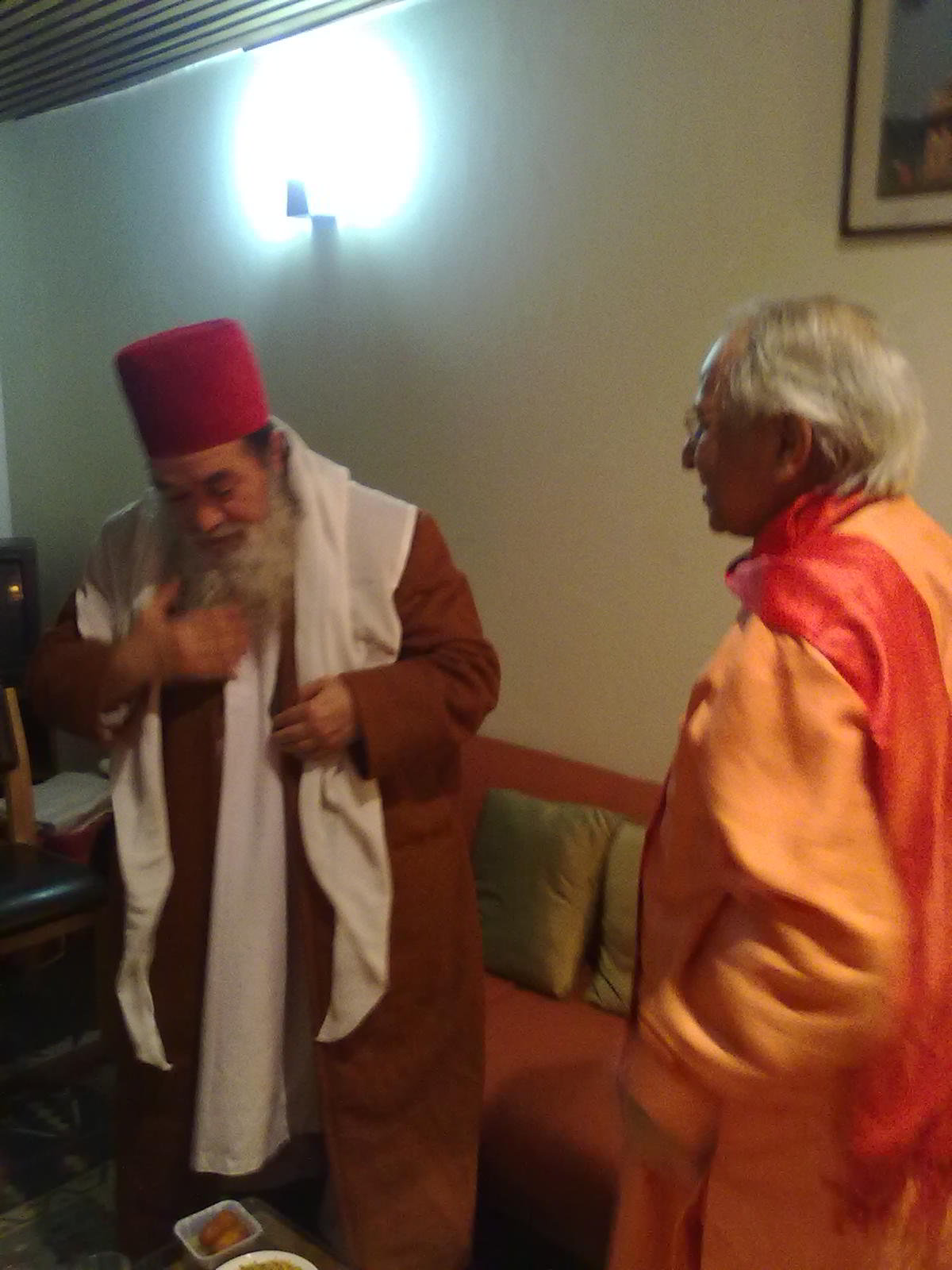
The sheikh’s devotion towards Swamiji was so evident and it humbled us who were present. After the preliminaries, Swamiji asked the Hazrat about their core practices. Hazrat replied, saying that the aspirants seeking the Divine in the sufi tradition approach a Murshid (master), and make requests for the teaching. Then the murid (disciple) stays at a khanaka (a place where a trainee stays during his training) near the master to absorb the teachings and practice the same. After initiation by the master, the disciple begins with breath-awareness, and mantra. The master then gives instruction in one of the two concentration-centers where the mantra is remembered; either navel or heart center (two finger breaths from the spiritual heart center, he said). First the mantra is chanted using tongue and vocal organs, and after uninterrupted practice for a long period of time the mantra is embedded deep in the disciple’s heart and then the disciples tongue rolls up applying a natural tongue lock (kechari). This is the stage when mantra becomes ajapa. Syed Ahmed Shah referred to this as “sultan ul azkar - The King of Meditations”. The sheikh expressed his desire to see a picture of Swami Veda’s master and after looking at a picture requested one of Swami Rama photographs for his personal collection.
As the two shared thoughts it seemed as if the Divine rejoiced by showering grace in the form of rain bringing coolness. It was a blessing to be part of such a meeting of the ‘hearts’. Reluctantly, the Hazrat sought Swami’s consent to leave him so that Swamiji could rest. But not before promising to visit upon him at SRSG, Rishikesh did the Hazrat walk out the room. |
||||||||
 |
||||||||