 |
||||||||||||||
|
||||||||||||||
| AHYMSIN newsletter, Issue - February 2012 | ||||||||||||||
|
||||||||||||||
Kamadeva & Valentine©Lalita Arya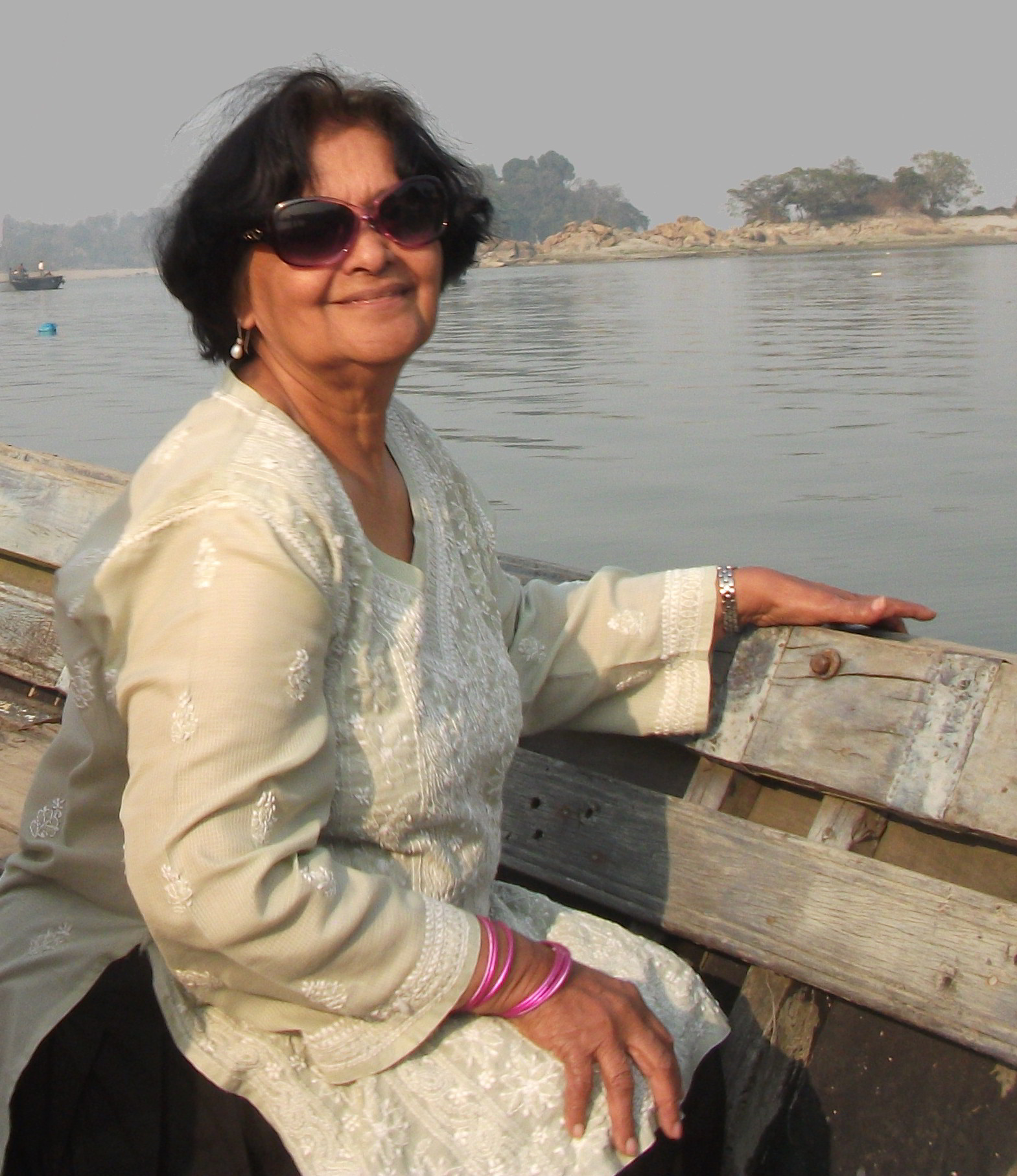
(On Brahma Putra River) There are several reasons why I have titled this article “Kamadeva & Valentine.” One is that it is in this month of February that Valentine’s Day is observed on the 14th, so I thought it appropriate to write something on this subject. Valentine is about Love in its universal appeal and understanding. All kinds of love are applicable for celebrations, but this is special with the attraction that culminates with couples finding in each other that love that is reserved for them alone. Kamadeva is the body-less God of Love and Desire in Indian mythology. I was company for one of my daughters on a North-East India yatra (pilgrimage). She had been taken on this same trip by her Dad about 30 years ago, and felt it was necessary to repeat it. I was happy to go along as I had never seen that part of India. The furthest east I had gone was to Allahabad (ancient Prayag) to have a special ceremony to the Goddess of the Vindhyachal Mountains for my son when he was only three. It was not a pleasant stay in Allahabad as it was just one night full of mosquitoes. I live in Uttarakhand, one of the states in the Himalayan range, and have traveled through Himachal (north), the Punjab (north-west), Rajasthan (mid-west), Tamilnadu and Kerala (south). So this Northeast trip was really appealing. India is vast, the cultures, languages, food, dress are very different from state to state from north to south and east to west. The thought of this trip made for a lot of excited anticipation. Little did I know what I was in for. Halfway through our journeys, it dawned on me that there was a special reason... and as my daughter so wisely put it- “Maji, you already had the destination in you, you just needed the journey!” One of the sacred places we visited is the Umananda Temple on Peacock Hill sitting like a full stop in the middle of the Brahmaputra River, the longest river in India. This island is reportedly cited as the smallest human inhabited island in the world. It is a really entrancing sight approaching from the river boat. This part of the Brahmaputra River flows through Assam, actually through the town of Guwahati – the ancient market for the areca nut. After we had darshan – holy visit of another temple, we decided to take a boat ride to this other place. It was really beautiful getting in a boat as I recalled my childhood and early marriage years of riding in paddled and steam boats in the rivers and creeks of Guyana. The Guyanese rivers tend to be brown from the muddy coastal areas, while the creeks tend to be black from the minerals and leaves floating in them. It was a pleasant surprise to see the mighty Brahmaputra a soft bottled green. I had seen it from air when we were flying in, meandering, winding its way from the Himalayas to the Bay of Bengal. It was exciting to see it again on the ground, and actually ride on it. After haggling with the boatman we managed to bring the fare down to a reasonable amount and boarded the boat. It was very relaxing as we pulled away from the river bank, the breeze so gently caressing my face, and playing with the unruly waves of my daughter’s hair. We just glided with the soft noise of the engine, my gaze riveted on the island ahead, as we offered flowers and prayers to the mighty river. We landed on the other side of the river and after divesting our shoes climbed some marble stairs to a complex of temples on the Peacock Hill. It was 3pm and the gods were having their siesta and would awaken at 4pm, so we sat around on the ground and watched some painters working on one of the pagoda like structures, while in another section some families were having lunch. There was a little crowd as the doors opened and we entered to make offerings. There was a main shrine and then there was one in a cave. We finished our worship with prayers. At the end of any offerings in a temple the priest always blesses with a tikka – a mark on the forehead. It varies from north to south as far as color is concerned as in some temples in the south you are blessed with sandalwood paste. In other parts, if you are young or married or male, you are usually given a red one. I have always been thus blessed with the red sindur or kumkum in any temple I have visited. After our prayers and offerings, the priest gave my married daughter a red tikka and Beni, our accompanying friend also got one. As the priest turned to bless me, he removed the brass plate with the red kumkum powder, reached down and picked up another little brass plate and dipping his finger in it tikka’ed my forehead with ashes!! For what seemed like a nanosecond that seemed to stretch into eternity, I felt as if I was burnt to death and almost disappeared from being. I looked up at him, he smiled at me, I tried to walk away following my daughter, with no idea where I was, where I was going or what else happened. Later I found out that the island we were visiting known as the Peacock Island in the Brahmaputra River is part of the Kamarupa Desha, (the country of the form of Love and Desire) the ancient name for Guwahati. It is known as the place where the Lord Shiva in all his meditative anger burnt Kama (the God of Desire in Indian mythology) to ashes. The story goes that Shiva was in deep meditation, when Kama appeared with his bow made of five kinds of flowers and of bees. As he sent his arrow flying in Shiva’s direction, Shiva was disturbed, opened his third eye and with the power of his beam of light destroyed Kama. The now body-less Kama appealed to Shiva saying that he was necessary for mankind to survive for without Desire, the world could not exist, so Shiva relenting gave him back his power to attract but left him body-less. His description in the SaundaryaLahari text is dhanuH pauShpam maurvee His bow consisting of flowers, the bowstring made of honeybees, five arrows (of five flowers), Spring (vasanta) as the sole Knight-attendant, cool Malaya-breeze as his battle chariot to ride... He is body-less, organ-less, mind born, but a mind churner, a frenzier, making lovers crazy. When I was leaving the US, my son who is teaching German at Princeton University gave me a book by Rainer Maria Rilke called The Notebooks of Malte Laurids Brigge, translated into English by Michael Hulse, (Penguin Classics) as a premature Christmas gift saying, “This is even better in the German, but I hope you like it.” I hadn’t looked at it until my return from our pilgrimage and found this paragraph that I thought well worth including here. Quote: “Why should I inform anyone of the changes within me? If I am changing I no longer remain the person who I was, and if I become someone else, it follows I have no friends or acquaintances, and to write to strangers, or people who do not know me, is quite out of the question.” I found this so apt, for though I know some of the people who follow these columns in this newsletter, there are many whom I do not know. While such experiences influence who we are it becomes difficult to share in a public forum, but I know that my readers will understand. Even as I type this, my hand trembles in memory of that moment, and I think of Kama, and what happened to him, imagining the havoc he creates without a body, what if he did have one!! Body-less he might be, but look carefully and there he is in your mind creating mischief beyond belief, for he is not Love but Desire as well. I send my greetings to all lovers everywhere with the wish – May your Desires be fulfilled, so long as they are genuinely filled with Love. May Kama’s flowers shower you with compassion, may Rati his partner smile at you. And may Shiva always give the wisdom of discretion that we all so need when Kama appears, especially on Valentine’s Day, or on that special day when you surprise yourself that you have ‘fallen’ in love. Here is part of a poem on Love from the master poet Khalil Gibran. (Thanks to my beautiful daughter-in-law Kani for sending it in an email) “Love has no other desire but to fulfill itself.
|
||||||||||||||
 |
||||||||||||||