|
||||||||
|
||||||||
| AHYMSIN newsletter, Issue - October 2011 | ||||||||
|
||||||||
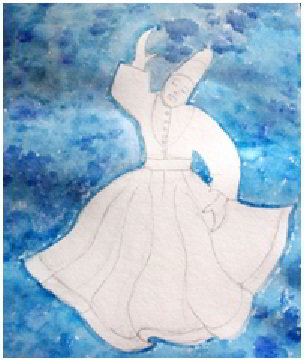
Something Swamiji Saidby Lalita AryaOne day Swami Veda phoned me and asked, “May we use your ashram cottage to host a dinner for our Sufi guests? SUFIWhen I was a teenager I would sometimes ask my Mom whether I could go visit my best friend, who lived not too far away. Since I would always return in a very happy mood, my mother did not hesitate to say yes, but always murmured to herself in Hindi – Maula ki daur masjid tak (a priest’s run is just up to his temple). But my friend and I spent such happy times together talking, giggling, laughing as teenagers do over nothing at all I did not mind visiting her over and over again. She was my BFF, (best friend forever) well, not quite forever. Now that I am no longer a teenager, the same saying starts to apply again. Except now when my son says – Maji, you have some free time from the grand kids, what would you like to do? I usually look at him as if he didn’t know ... my favorite pilgrimage spot B & N ... Barnes & Noble bookstores. I have visited several B&N bookstores in Toronto, London and of course here in the US, but the one I like best is in Princeton. It has this café island set up high in the middle space, which I am sure is used by many to locate one’s whereabouts. My daughter-in-law and I once drummed up enough courage to participate in a Poetry slam there and I got up to the semi-finals! The bookstore is at the end of the Market Fair Mall, and has several entrances, so one can easily get disoriented. The café in the middle is like a compass that guides you to whichever section you want to visit. I usually head for the Magazines – the section that carries the journals on Yoga, Spirituality and related topics. I was surprised to find among the many magazines one called SUFI, just that. The cover is what attracted me first. I tried to locate the name of the artist but could not, but on opening the magazine I found other beautiful paintings and illustrations and being an artist myself, I was very moved by them. The contents of the magazine are very inspiring with translations of poems by the famous Rumi and others. Also very fascinating is an interview titled Love, Passion and Divinity with Judith Ernst and Vasudha Naryana on erotic poetry and divine love in the Song of Songs (my husband had read this to me) and from Hindu traditions. Judith had spent three years in India and Pakistan and had become fascinated with the various art forms depicting Krishna and the gopis, the Rasa Lila (dance of Radha and her friends with Krishna) and Gita Govinda (which my husband had also read to me) and the connection between human and divine love. Vasudha grew up with “this poetry, but it was not the literature, it was in the performing arts and in visual arts.” She also talks about the Tamil saint Goda Andal, a 9th century female poet who longed for union with the Divine, not “something calm and peaceful, but a totally passionate union”. Humans have this beautiful gift of expressing passionate love in which two bodies unite in such a way that sense of time and space is lost. If this little passion is so powerful, can one imagine the union of the soul with its mighty source? I once was employed by the Ministry of Agriculture, Forests, Lands and Mines in Guyana. With another colleague and representatives of some Caribbean islands, we were given an air tour of the whole country. The word Guyana is an Amerindian word meaning Land of many Waters, and that what Guyana is. We have many rivers flowing into the huge Atlantic. In that air tour I was fascinated to see the colors of the rivers – from black to dark brown to muddy earth – forming a distinct separation from the color of the blue ocean as they flowed from their estuaries into the Atlantic, maintaining their identities as rivers. But by the time those waters fully merged with the waters of the ocean, there was no distinction in color as it was all just blue. So is the soul seeking to merge with its source carries its loaded self, but on purification is completely absorbed in the vastness and there is no difference in the individual self and the supreme Self. The merging is total and complete, whether the waters mix calmly or whether turbulent waves drown the differences. This is what I like about Sufi poetry it makes no difference in the passionate love for the Divine or in the more sedate approach. Why should we not be excited about that Union? It has all to do with Love. Here is what Rumi says about Love as quoted in this magazine.
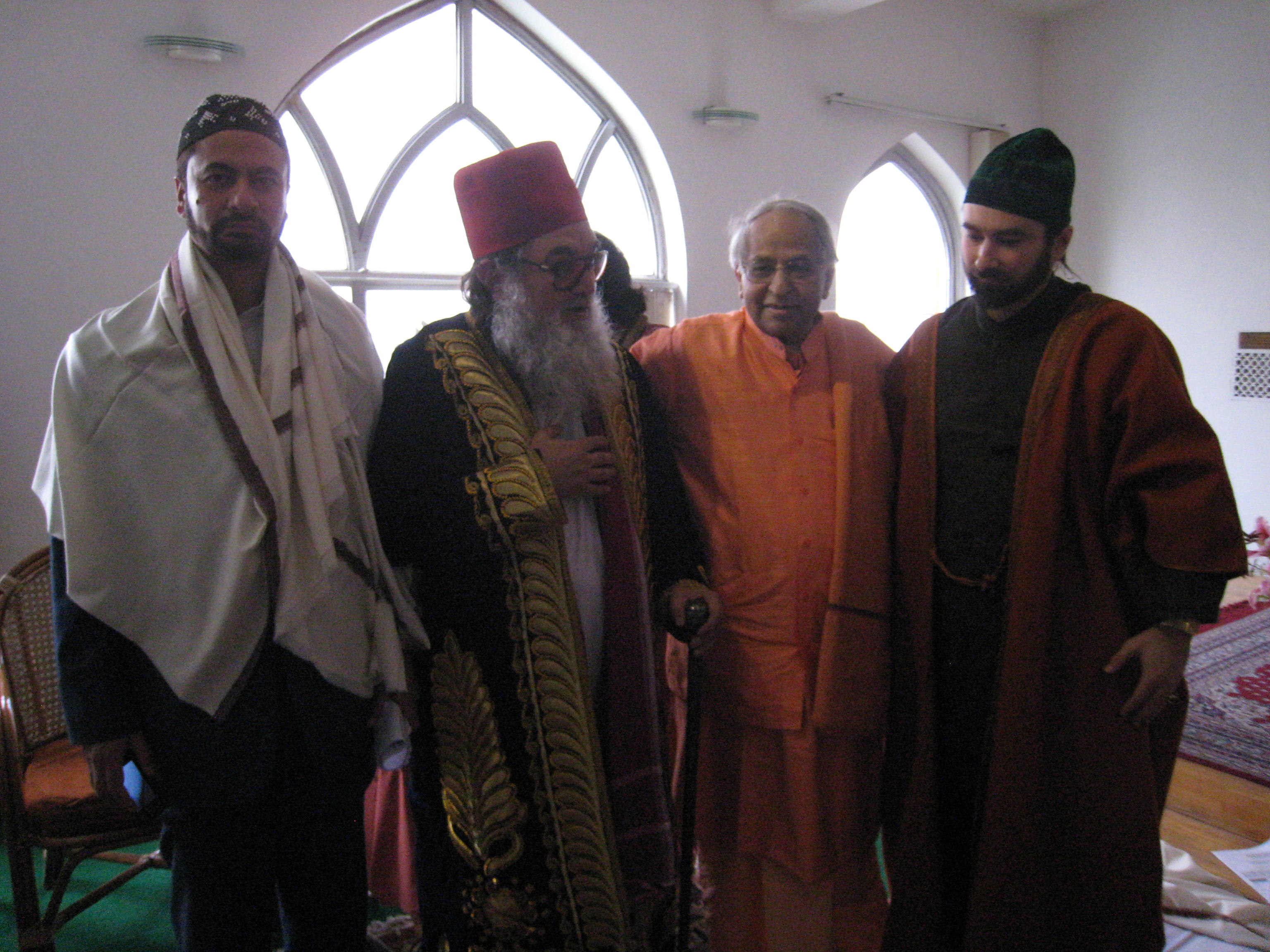
Is it not true that “the intellect fails miserably in explaining love”, whether it be the love parents have for their child, or the lover for the beloved, or the seeker for union with the divine? To know this all out Love and the ability to express it is one of the most beautiful aspects of Sufism. Of course there are many others, like the Bauls of Bengal who have the same feeling about Divine Love and many sects of Hinduism also. Let us remember Radha’s passion for Krishna or Lalla Ded of Kashmir. Recently Swami Veda Bharati hosted a Sufi seminar at our ashram in Rishikesh and we were honored to have international practicing Sufi guests. It was so wonderful to know that this beautiful approach to the Divine is alive and well and in spite of modernity exists in its expression of abandoning oneself entirely in the search, in the yearning, in the hope of uniting with that Divine force, we all seek whether through spirituality of meditation or bhakti in song and dance. Sufis blend in with the local culture, and have traditionally used relevant selections of poetry from the riches of oral and other heritages. The internal needs to be unlocked so that the flow comes naturally. Inhibitions cease to exist.
The whole idea is the abandoning of the ego, of the small self in order to merge with that Divine Self. As a child I recall going to a puja (worship) ceremony in a temple in Guyana. We sometimes used to go there specifically for the “Prasad” sweets distributed after the rituals. There were much of waving lights and bowing to the images – all fascinating to a child. But then one day we were invited to witness the puja done by a ‘brahmachari’ (celibate student) from India. First of all, to my young eyes, this guy was huge, with a lovely flowing black beard, wide bright eyes, and short waving locks. He was dressed in one piece of something like a gown, and we were told that he and his companions were from Bengal, India, and were touring the world with their song and dance. At first he just stood and did the regular offering of flowers, bowing to the images but when he waved the lights he started swaying gently. Eventually he put down the lights and picked up a small water vessel (lota) and started strutting with it around the images, he put that down and picked up a sword, to many agitated gasps in the congregation. What? A sword in the temple? Well, there are on display the swords of Guru Gobind Singh at the Paonta Sahib Gurudwara near the Himachal border in India. I have been there. Anyway, the brachmachari waved the sword around a little and then he started to sing in Bengali and dance gracefully around the images. I was never so surprised in my life accustomed as I was to sedate and solemn worship. He sang and danced with vigor and abandon, captivating all the astonished people and made quite an impression on my young mind. I also remember witnessing a Christian worship by Afro-Guyanese with the same abandon and poignant calls of “Amen” and “Haaleluiah”. It slowly began to dawn on me that Love and Passion are also ways of expressing one’s worship of God and showing no restraint in such a way. Sitting with Baba at his ashram in Rishikesh, near the banks of the mighty Ganga, in a sweet and fragrant atmosphere of sunset breeze, the chants he led us through which made us sway and become totally absorbed. One day it even started to rain, and no one moved a muscle so lost we were in the enchantment of his voice and the evening. To understand the sentiments and feelings of a Sufi, just watch and listen to them recite their poetry handed down from thousands of years of practice and then sing them with exuberance and soul. And I say:
Article © 2011 Lalita Arya (article started at St. Louis Airport, Missouri while waiting for a delayed flight and completed in Princeton, New Jersey, Sept 2011) Editor’s Note: Lalita Arya is a mantra initiator and a member of AHYMSIN’s Adhyatma Samiti, or Spiritual Committee. She is the founder of KHEL charities; please see http://www.khelcharities.org/ A previous newsletter has more information about the Sufi dialogs at SRSG: http://www.ahymsin.org/docs2/News/11Feb/03.html About "Something Swamiji Said"As we know, Swami Veda Bharati is planning to take to a vow of silence for 5 -7 years on 10th March 2013. This column ("Something Swamiji Said") is to celebrate his many years of traveling and teaching and also to honor what he has given us through this. Is there something swamiji has said that has impacted your life? Please write about it and share with us. There is no set length. It can be short or it can be long. It can be a sentence, a paragraph, a short recollection, an article... It can have pictures and photos. It can be prose and/or poetry. Whatever comes from your heart. Do not be afraid. We thank others have already shared Something Swamiji Said and will be printing these in future newsletters.
|
||||||||
 |
||||||||